Coal for Christmas: What a Wyoming Bill Says About America’s Energy Past, Present, and Possible Future
If you’ve ever joked about getting “coal for Christmas,” Congress may have just made the punchline a little more literal. A new joint resolution aims to reverse a Bureau of Land Management decision that restricted federal coal leasing in Wyoming’s Buffalo Field Office, one of the most productive coal regions on Earth. Its passage doesn’t just reopen the door for future mining; it reopens an old conversation about America’s coal identity, its global competitiveness, its legacy of racial exclusion, and what ordinary people should understand about an industry that refuses to fade quietly into the background.
AMERICAN MAINLANDENTREPRENEURS AND THE AFRICAN ECONOMIC COMMUNITYMOTHER LANDPOLICY
11/21/20255 min read

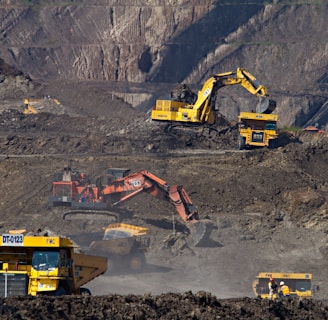
Wyoming: The Coal Capital Few Americans Think About
Mining has shaped Wyoming’s economy for over a century. The Powder River Basin, where the Buffalo Field Office sits, produces more coal than any other region in the United States. These vast, low sulfur reserves fueled everything from industrial growth to cheap electricity across the Midwest and West. When the BLM revised its Resource Management Plan in 2024 to stop offering federal coal for new leasing, it was responding to a court ruling requiring a deeper review of climate impacts. The new resolution would roll back that revision and reinstate the 2015 plan, meaning coal could once again be leased for extraction. To many in Wyoming, this represents stability. To climate analysts, it represents a step backward. And to the rest of the world, it signals that American coal still plans to compete internationally.
America’s Coal Industry: Down, But Not Gone
Nationally, coal production has fallen from its 2008 peak. Power plants have retired, natural gas has surged, and renewables keep expanding. Still the U.S. remains one of the top coal producers in the world. Wyoming alone accounts for around 40% of U.S. coal output. Exports continue to Asian, European, and African markets, depending on pricing and demand. Even in decline, coal is a major economic, political, and environmental force.
Global Competitors: Indonesia, South Africa, Australia, and Beyond
Internationally, U.S. coal competes with major exporters including:
Indonesia – currently the world’s largest thermal coal exporter
Australia – dominant in metallurgical (“steelmaking”) coal
South Africa – long-time supplier to European and Asian markets
Colombia – known for low sulfur content
Russia – still a significant exporter despite sanctions altering trade patterns
The Powder River Basin’s coal is inexpensive to mine and clean-burning compared to many global sources. If new leasing increases supply, U.S. coal’s price advantage could strengthen, especially for buyers looking for predictable long-term contracts.
African Markets and U.S. Pricing: A Quick Comparison
Coal pricing varies by type (thermal vs metallurgical), sulfur content, transportation cost, and the global spot market. But in broad strokes, U.S. thermal coal from Wyoming is often cheaper at the mine, sometimes as low as $10–$12/ton. South African coal can run higher due to shipping and port constraints, often nearer $70–$100/ton delivered. Nigerian and other West African coal resources exist but are not major global exporters, Africa primarily imports coal for industrial and electricity uses. This means U.S. coal, if abundantly available and competitively shipped, can challenge African domestic producers or influence pricing in energy-hungry African markets.
A History of Extraction and Exclusion
America’s mining industry was built on the sweat of immigrants, the labor of the working poor, and the exploitation of marginalized groups. But historically, Black Americans were not given wide access to coal mining careers. Despite Black labor building railroads, steel industries, and energy infrastructure, coal mining in the 19th and 20th centuries often remained: racially segmented, with Black workers relegated to the hardest, lowest-paying, most dangerous jobs. some early mining unions excluded Black workers outright. It was also geographically inaccessible, since the major coal basins of Appalachia and the West did not have large Black populations. This exclusion had downstream effects: White miners built generational wealth, gained pensions, and held political power in coal regions. Black communities, meanwhile, absorbed pollution from energy generation without receiving the job benefits from extraction.
Strategies for Increasing Diversity in Mining, Energy, and Resource Policy
If the coal and broader energy sectors are going to evolve, increasing diversity, inclusion, and representation isn’t just an ethical conversation, it’s an operational and strategic one. Many companies and agencies have already identified that the future workforce, future investors, and future innovators will come from a more diverse America than the one that built the original coal industry. Below are non-persuasive, structural pathways often discussed by analysts, scholars, and workforce planners.
Expanding Education Pipelines Into Geoscience, Engineering, and Energy Careers
Historically, Black Americans were excluded from mining trade apprenticeships, certain engineering programs, and resource policy institutions Today, increased diversity could come from strengthening access to geology and earth science programs at HBCUs, mining engineering scholarships, environmental and energy policy fellowships, and paid internships with federal agencies (BLM, USGS, DOE) These pipelines would help build representation not only in extraction, but in regulation, research, and future energy planning.
Coal jobs traditionally meant on-site mining, heavy machinery and underground or surface labor but the modern resource economy includes roles like: satellite and drone surveying, environmental compliance, land reclamation
logistics and transportation, and more. These positions require different skill sets and create entryways for people historically excluded from mining operations. Coal and energy companies also contract with other providers from trucking and rail to safety equipment and engineering. Supplier diversity programs can broaden access by encouraging procurement opportunities for Black-owned firms, vendor training programs for small businesses, and mentorship pipelines for minority contractors. This approach grows participation without changing mining itself.
Equity in Land Reclamation and Environmental Restoration
As coal regions transition, a major industry is emerging in mine reclamation, soil restoration, water treatment, habitat rebuilds, and community redevelopment. These industries are often funded by federal programs and grant streams. They create opportunities for entrepreneurs, contractors, and engineers from underrepresented communities to engage in the long-term environmental and economic rebuilding of former coal regions.
Diversity in the energy economy is not limited to labor it also includes, retail investing literacy, participation in publicly traded energy firms, community-owned solar or cooperatives, mineral-rights education, land-lease consulting, and energy-transition venture participation. These strategies relate to the broader theme of participation in resource economies, historically shaped by land access, capital access, and generational knowledge.
Many Black communities live near power plants, rail corridors, and industrial infrastructure tied to coal distribution.
This is about presence in the policy side of the energy system, not persuasion toward a specific political outcome.
As the U.S. moves through an energy transition, inclusion helps ensure that the future energy landscape is shaped by the full spectrum of America’s talent and communities.
Energy Grids and Climate Stakes
More coal leasing in Wyoming doesn’t just affect miners. it affects the entire energy ecosystem. Coal still power portions of the Midwest, Southwest, and Southeast. Increased coal production can delay grid transitions if utilities choose cheaper coal over renewable investments. Coal remains one of the highest carbon-emitting fuels and more leasing means more potential combustion, which affects national and global climate targets. Communities of color including Black neighborhoods in many urban areas are more likely to live near fossil-fuel plants and transportation corridors. Changes in the coal market can influence overall pollution burdens even far from Wyoming.
Investment Potential for the Everyday American (Neutral Overview)
This isn’t investment advice just a snapshot of how people sometimes engage economically with energy markets. Coal companies are fewer today, but some still trade publicly. Their value often moves with export demand, regulatory changes, and competition with natural gas and renewables. Because coal is heavy and bulk-shipped, railroads (especially in the West) benefit from increased production. Electric utilities that still operate coal plants may experience cost shifts depending on fuel availability and federal policy. Some investors look not at coal itself, but at:
renewable energy
energy storage
grid modernization
reclamation and environmental service companies
All of these sectors react, directly or indirectly, to changes in federal coal policy.
the Long Conversation Ahead
The Wyoming bill may feel like a technical policy reversal, but its ripples touch on global energy markets, domestic infrastructure, historical inequities, and the future role of diverse communities in the energy economy.
Coal may be shrinking, but it still shapes decisions, investments, and opportunities at many levels of society.
And as America reconsiders what its energy future looks like, who gets to participate in that future, scientifically, economically, and institutionally, will matter just as much as which fuels are extracted from the ground.


Sign Up for Text Updates
Get text messages sent directly to your phone to stay up-to-date on the Fellowship's life-saving work around the world.


Subscribe to our Newsletter
Stay informed about issues affecting Africa, the African descendant nation, and Africa American relations, receive Daily Devotional and more
Who We Are
Who We Help
Latest News
Learn
Act
Ways to Give
Also of interest
@ 2025 International Fellowship of Black Americans and Africans ®
1705 East Joppa Rd
Parkville MD 21234
info@ifbaa.org
1-855-984-3222
A 501(c)(3) tax-exempt, non-profit organization.
The Fellowship's tax identification number is 39-4751944
Privacy Policy |