The Signifying Revolutionary: The Life and Legacy of Jamil Abdullah Al-Amin
In the annals of Black American resistance, few figures loom as large—or as complex—as Jamil Abdullah Al-Amin, once known to the world as H. Rap Brown. His life was a fierce poem of transformation: from charismatic firebrand of the Black Power era to devoted Imam, from prisoner to symbol, his journey embodies a deeply rooted tradition in African American culture: the art of signifyin’.
GLOBAL DIASPORAAMERICAN MAINLAND
11/24/20254 min read
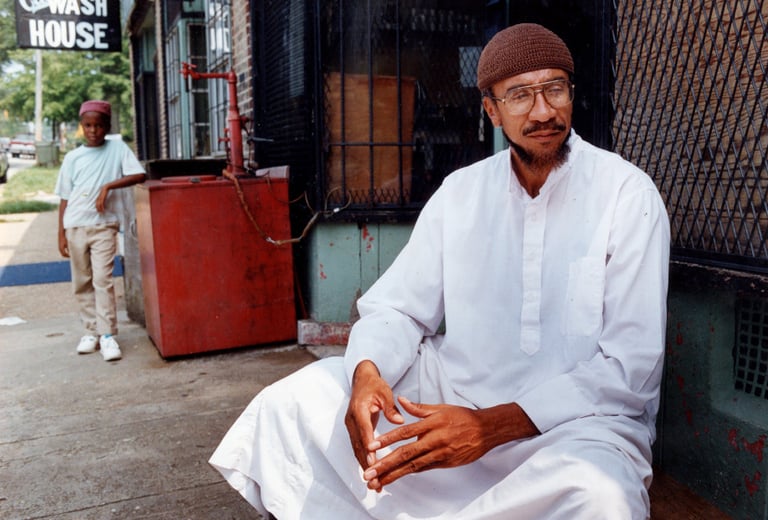
Born Hubert Gerold Brown on October 4, 1943, in Baton Rouge, Louisiana, he came of age during the height of the civil rights movement. He dropped out of Southern University to organize for SNCC (the Student Nonviolent Coordinating Committee), becoming its national chairman in 1967, stepping into the mantle once held by Stokely Carmichael.
Brown earned his moniker “Rap” not just for rhythm but for razor-sharp rhetoric: his speeches crackled with urgency, defiance, and unapologetic militancy. In his own words, “Freedom cannot be given … it’s not a welfare commodity. It’s something that has to be gotten and taken by the people who are oppressed.”
Later, his path shifted: while incarcerated, he converted to Islam, adopted the name Jamil Abdullah Al-Amin, and relocated to Atlanta where he opened a grocery store and became an imam in the West End neighborhood.
Even as this transition occurred, his life remained caught in the cross-hairs of justice and activism: Arrested in 2000, convicted in 2002 of murder and other charges, he served life in prison.
In death, his legacy is complicated but undeniably rich, a mirror of the Black American freedom struggle itself.
The Art of Signifyin’ What It Means & Why It Matters
To understand how Al-Amin spoke and acted, we must grasp the concept of signifyin’, a term in African American cultural studies describing a specific linguistic, rhetorical, and cultural mode of meaning.
Simply put:
Signifyin’ uses indirection, double meaning, metaphor, wordplay, often in Black vernacular speech, to challenge power, re-frame narratives, claim agency. It is rooted in African American oral tradition, folklore, and vernacular creativity (for example, the “signifying monkey” motif). It enables speakers within a shared cultural context to critique, resist, educate and mobilize, often because the familiar language of power doesn’t always serve or reflect the realities of marginalized communities.
In the context of Black culture, signifyin’ is a kind of cultural strategy: it allows for survival, resilience, and resistance. It allows messages to be delivered both overtly and covertly, with nuance and layered meaning.
It matters now as much as ever, from rap lyrics to protest chants to social-media commentary, the tools of signifying are alive in how Black culture speaks back to power.
How Al-Amin Mastered Signifyin’
In his early activism, “H. Rap” was a demagogue of sorts. His speeches had the cadence and rhythm of performance but also the urgency of revolt. He didn’t just use words; he used language as weapon and bridge. For example:
His rhetorical flourish (“We are going to control our community… If America don’t come around, we should burn it down.”) signified both literal and symbolic revolt. His adoption of a new name (Jamil Abdullah Al-Amin) and faith signified transformation, resistance to one mode of identity and adoption of another.
His work as imam in Atlanta and community leader meant that his signifying was not only on stages or in writings, but in building institutions, in culture, in grassroots contexts.
He used the tools of signifying to speak to multiple audiences: the disenfranchised youth, the radical intellectuals, the community organizers, faith groups. The layered meanings in his rhetoric and actions allowed him to inhabit contradiction, firebrand and minister, rebel and community builder.
In his activism, he didn’t simply condemn injustice; he reframed it. For him, the struggle wasn’t a sideline conversation. It was existential, spiritual, and communal. He used language not just to demand justice, but to imagine a new world.
Some of His Greatest Accomplishments & Moments
Stepping into SNCC leadership in 1967, amplifying the Black Power message when many still believed non-violence was the only path.
Authorship of the autobiography Die Nigger Die! (1969) which remains a classic statement of militant Black identity and critique. ([Wikipedia][6])
Conversion to Islam while in prison, the launching of a new life of community service in Atlanta — opening a grocery store, launching youth initiatives, preaching against drugs and violence.
His influence in community peace-movements: as the “chronology” site notes, his work in the late ’80s and ’90s with street organizations and “urban peace treaties” helped drop homicide and crime rates in Black and Brown youth communities. ([thejerichomovement.com][4])
Even in incarceration, his case has galvanized debates around justice, political prisoner advocacy, prison conditions, and racial law enforcement.
Carrying Forward His Energy & Legacy Into Today
So how do we honour his legacy, and use the lessons he offers for our current moment?
Embrace language as power: Just as he used signifying to challenge power structures, we too can reclaim language, whether in speeches, art, social media, to resist, propose vision, and build. Transformation is not betrayal: Al-Amin showed that radicalism and faith, militancy and community building are not mutually exclusive. Many movements today often draw from one tradition. His life suggests we can draw from many.
Community-rooted organising: His work at neighborhood level matters. Building institutions including stores, faith centers, and youth programs, in the places where people live and struggle makes resistance tangible.
Culture + politics = liberation: Signifyin’ reminds us that culture isn’t separate from politics. Art, rhetoric, identity, myth-making all matter. To change society you also change culture. His life raises questions about incarceration, law enforcement, political targeting. Let his story challenge us to keep pushing for justice reform, fairness, transparency.
Conclusion
Jamil Abdullah Al-Amin’s life was raw, complicated, bold, and absolutely necessary to the story of Black American resistance. He inhabited the edges: the street and the mosque; the underground movement and the community centre; the rebel and the guide. By celebrating his life, we do more than remember a person, we reclaim a tradition: the tradition of signifying, of refusing to be silenced, of using language, community, culture, faith, and resistance to claim power and vision.
As we move forward in a time fraught with racial injustice, mass incarceration, cultural struggle, his legacy is a torch. May we carry it well.
[1]: https://en.wikipedia.org/wiki/H._Rap_Brown?utm_source=chatgpt.com "H. Rap Brown"
[2]: https://www.archives.gov/research/african-americans/individuals/h-rap-brown?utm_source=chatgpt.com "H. Rap Brown [Jamil Abdullah Al-Amin] (October 4, 1943)"
[3]: https://www.thefreelancenews.org/home/h-rap-brown-black-man-america-loved-to-hate-has-died?utm_source=chatgpt.com "H. RAP BROWN, BLACK MAN AMERICA LOVED TO HATE, HAS ..."
[4]: https://www.thejerichomovement.com/profile/al-amin-jamil-abdullah?utm_source=chatgpt.com "Al-Amin, Jamil Abdullah | Jericho Movement"
[5]: https://www.imamjamilactionnetwork.org/biography/chronology_of_life_and_work?utm_source=chatgpt.com "A Comprehensive Chronology of Imam Jamil Al-Amin's Life Work ..."
[6]: https://en.wikipedia.org/wiki/Die_Nigger_Die%21?utm_source=chatgpt.com "Die Nigger Die!"
[7]: https://time.com/6111614/h-rap-brown-jamil-al-amin/?utm_source=chatgpt.com "The Many Lives of H. Rap Brown"


Sign Up for Text Updates
Get text messages sent directly to your phone to stay up-to-date on the Fellowship's life-saving work around the world.


Subscribe to our Newsletter
Stay informed about issues affecting Africa, the African descendant nation, and Africa American relations, receive Daily Devotional and more
Who We Are
Who We Help
Latest News
Learn
Act
Ways to Give
Also of interest
@ 2025 International Fellowship of Black Americans and Africans ®
1705 East Joppa Rd
Parkville MD 21234
info@ifbaa.org
1-855-984-3222
A 501(c)(3) tax-exempt, non-profit organization.
The Fellowship's tax identification number is 39-4751944
Privacy Policy |